
The Honest Cathedral City Directory Shelf
No official Cathedral City or Riverside County library source enumerates a complete publisher-and-year run for local city directories, reverse directories, telephone books, obituary indexes, or Sanborn sheets. That is the first finding, not a missing detail to fill with a guess. Cathedral City incorporated in 1981, so earlier people and addresses may be filed under Palm Springs, Coachella Valley, Riverside County, a telephone exchange, a precinct, a subdivision, or unincorporated county geography.
| Collection | Years | Where Held | Access |
|---|---|---|---|
| Cathedral City and Coachella Valley volumes | Not enumerated in official sources | Riverside County Library and regional collections | Catalog and reference inquiry |
| Reverse or criss-cross directories | Not enumerated in official sources | Library and nearby historical collections | Ask for the address section and boundary |
| GTE Palm Springs and nearby areas address directories | March 1988, March 1989, March 1990, September 1990 | Los Angeles County Library Californiana catalog lead | Verify the volume and local holding |
| Federal census schedules | 1790-1950 public nationally | NARA, FamilySearch, and library databases | Free or library-access route |
| California images and manuscript finding aids | Collection-specific | Calisphere and Online Archive of California | Free finding aids and digital items |
The GTE listing is a strong regional lead, not proof that Riverside County owns those books or that every household appears. For every other run, ask staff to verify the title, publisher, inclusive years, gaps, reverse section, and copying rules. A reliable city directory record begins with a verified edition rather than a plausible-looking year.
Note: A missing official shelf list is evidence of a research gap, not evidence that Cathedral City never had a printed directory.
Search Routes for Cathedral City Directories
The Cathedral City Library branch is part of the Riverside County Library System and is the practical first reference stop. It is listed at 33520 Date Palm Drive with a main number of 760-328-4262. Published hours are Monday, Tuesday, and Thursday from 10 a.m. to 6 p.m.; Wednesday noon to 8 p.m.; Friday closed; Saturday 10 a.m. to 6 p.m.; and Sunday 1 p.m. to 5 p.m. Verify current hours before visiting. The branch catalog and staff can point to local newspapers, telephone books, yearbooks, genealogy databases, and material held outside the open shelves.
Search the catalog with several phrases: “Cathedral City directory,” “Coachella Valley directory,” “Palm Springs city directory,” “Polk,” “telephone directory,” “reverse directory,” and a street or subdivision name. Ask whether closed-stack or uncataloged ephemera is available. Palm Springs Library, at 760-323-8299, is a regional fallback because desert publishers often grouped nearby communities in one volume. A request that names the community, publisher, date range, and address section is easier to check than a broad request for everything local.
The Calisphere historical collections portal is a useful place to test California images and finding aids before assuming a Cathedral City volume is online.
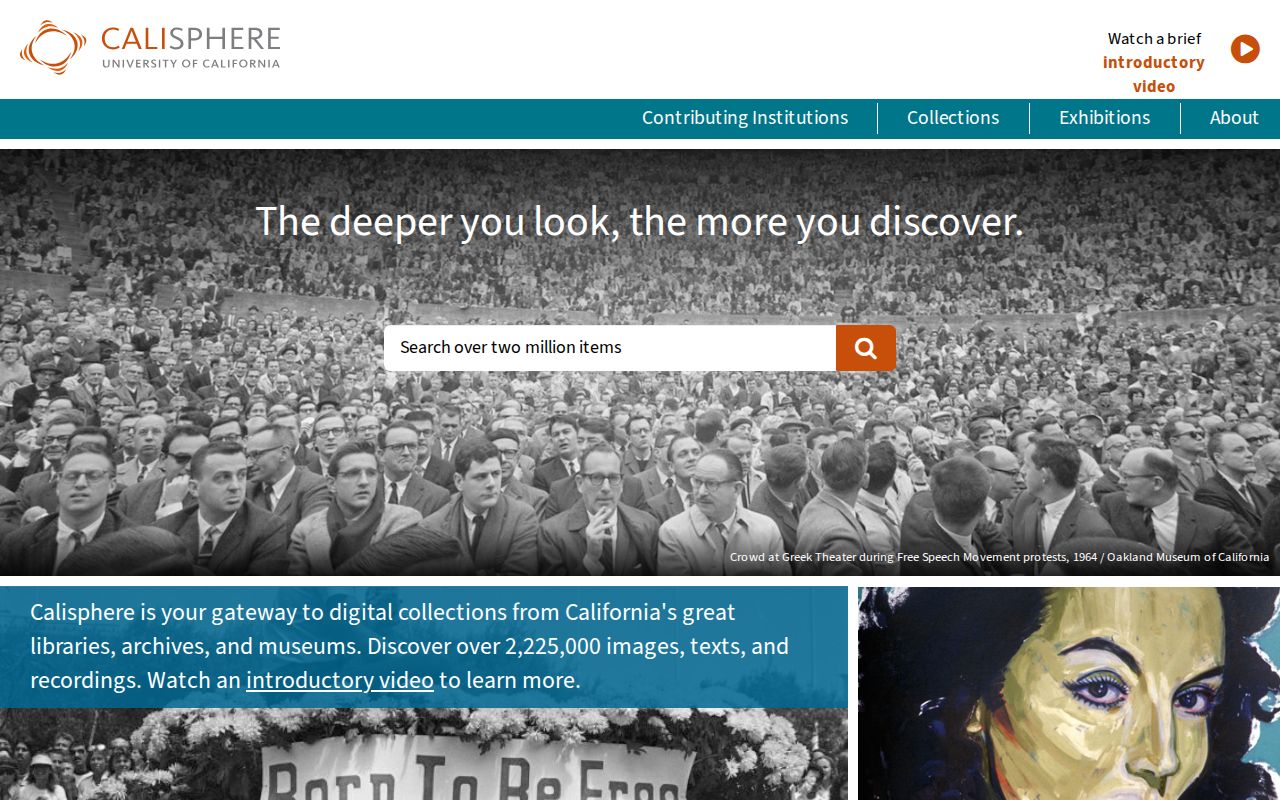
Calisphere can lead to regional photographs, manuscripts, and other context, but a digital collection result is not by itself a verified local directory run.
How to Read a Cathedral City Directory
A traditional entry is a compact record of how a publisher described a person and an address at one point in time. It may place a surname and given name or initials first, add a spouse in parentheses, use a widow notation, print an occupation or workplace line, and give a residence address. Some editions use an ownership or residence-status mark, while others use a cross-reference to another entry. The exact meaning belongs to the volume's own key.
No official Cathedral City-specific sample page was verified, so a generic Polk pattern should not be presented as a local specimen. When a volume is found, capture the title, publisher, edition year, page and column, alphabetical or reverse section, printed spelling, address, telephone if present, residence-status mark, and the boundary statement before drawing a conclusion.
| Printed name | Surname, given name or initials, with spelling preserved exactly |
|---|---|
| Family notation | Spouse in parentheses, widow notation, or a cross-reference when printed |
| Occupation or workplace line | A descriptive field when supplied by that edition, not proof of residence |
| Residence address | House number and street as printed, including older street wording |
| Residence-status mark | Ownership or other symbol only after the volume key is checked |
The R.L. Polk directory search at Internet Archive can help locate digitized regional material and publisher clues.
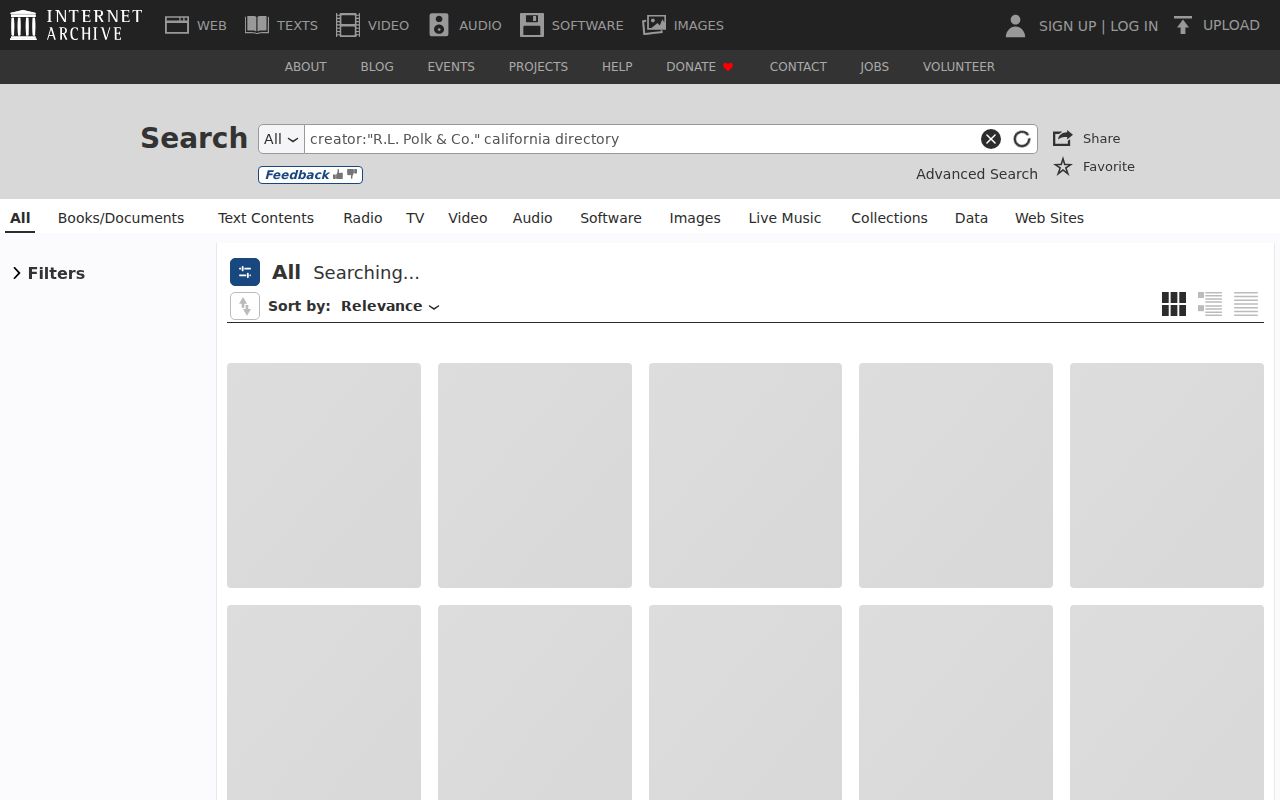
The search screen is a discovery lead only. Confirm that any volume actually names Cathedral City or the relevant regional boundary before using an entry.
Fields in a Cathedral City Directory Entry
Three terms keep a printed line from being overread. A directory is a publisher's snapshot, not a census and not a deed. It can point to a person, a listed telephone, or a street, then send the researcher to a stronger record for ownership, family relationships, or an event date.
- Criss-cross directory
- A reverse section arranged by street and address. It may show a listed telephone number, but coverage and symbols vary by edition.
- Householder index
- A name-based aid used to locate a printed household entry. Verify the section label and scope in the volume itself.
- Abbreviation key
- The publisher's explanation of shortened words, relationship marks, occupations, and address or status symbols.
- Coverage boundary
- The opening statement that tells which towns, exchanges, suburbs, or rural areas the edition tried to include.
Read the key before comparing two editions. A changed abbreviation, omitted suburb, or different canvass can look like a change in a family when it is only a change in the book.
Note: A listed subscriber or householder is a lead to a place and time, not proof that every person in the household was printed.
Cathedral City Library's Record-Keeping Story
The branch itself is part of Cathedral City's local research history. Community library service opened in Town Hall in 1938 and became a county branch in 1939. An Army hospital barracks then served as the library site for 39 years. A Highway 111 branch opened June 3, 1981, the same year the city incorporated, and the current 20,000-square-foot building was dedicated in January 1996.
A February 2008 fire stopped service, and the branch reopened in June 2009 with new materials, computers, and RFID. No source says that the fire destroyed a particular directory, so it should not be used to invent a missing-volume story. The better approach is to ask the branch and nearby repositories what survives, where it is held, and whether it is cataloged.
| Year or period | Library milestone |
|---|---|
| 1938 | Community library opened in Town Hall |
| 1939 | Service became a Riverside County branch |
| 39 years | Former Army hospital barracks served as the branch |
| June 3, 1981 | Highway 111 branch opened |
| January 1996 | Current 20,000-square-foot building dedicated |
| February 2008 to June 2009 | Fire closure followed by reopening |
The Online Archive of California adds finding aids for manuscripts and images that may sit outside the city library catalog.
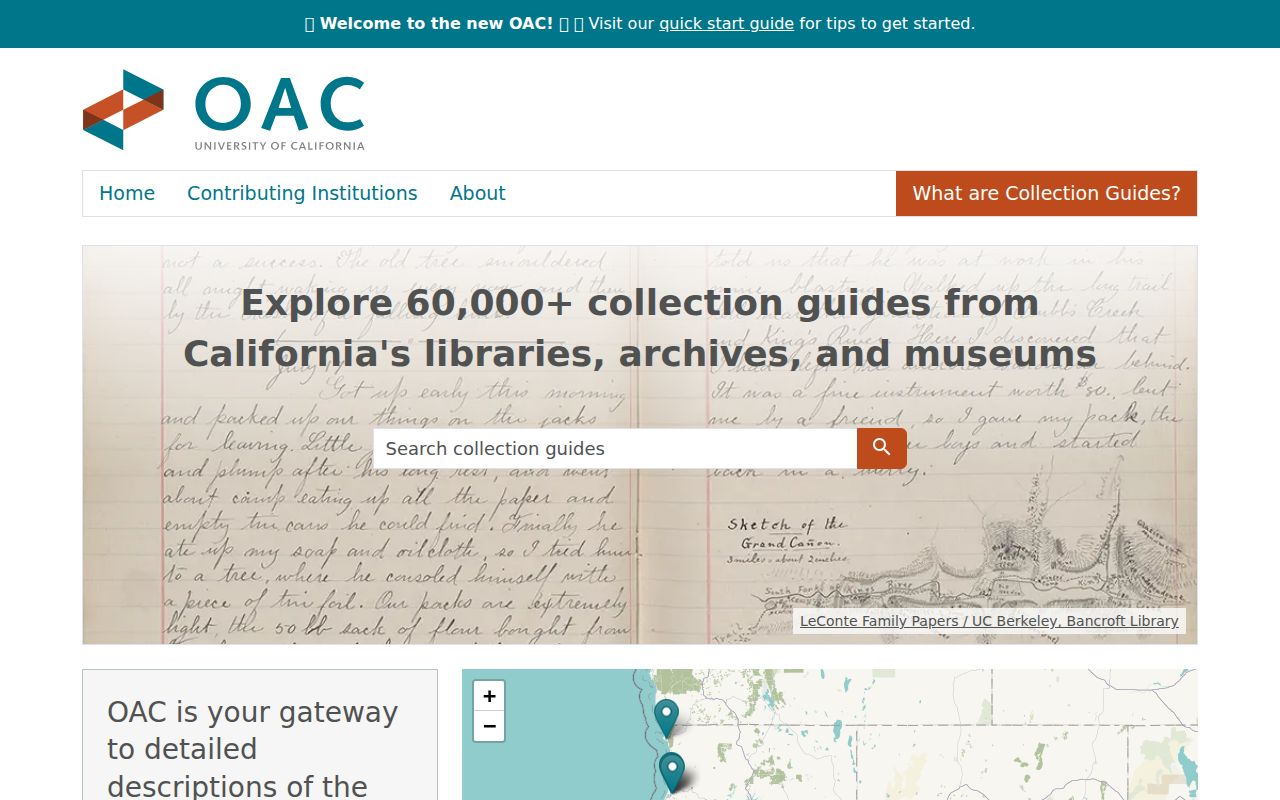
Archive finding aids can supply context for a name, street, or local group even when no complete directory volume is digitized.
Trace a Cathedral City Household Over Time
Start with one known year, address, or name. Preserve the printed form before normalizing it. The same household may appear with a middle initial in one edition, a spouse in the next, and a different street form after a move. A careful sequence makes the gaps visible instead of turning an absence into a fact.
- Photograph or transcribe the title page, edition, boundary statement, and abbreviation key.
- Find the first known name or address, then check nearby editions in both directions.
- Record spelling, spouse or widow note, address, telephone, occupation line, and status mark exactly.
- Mark first appearance, each move, each disappearance, and any “removed to” reference as separate events.
- Compare the result with census schedules, deeds, permits, voter registers, newspapers, obituaries, and probate.
A disappearance can mean death, a move, a nonpublished year, a missed canvass, a boundary change, an unlisted telephone, or exclusion from the volume. It is not a proven move date. If an old entry needs a modern name check, the Cathedral City resident lookup route keeps that later verification separate from the historical shelf.
Note: Keep a source log with edition, page, address, spelling, and repository so another researcher can repeat the same trail.
Cathedral City Directories Beside the 1950 Census
Federal population schedules are public through 1950 under the 72-year rule, while the 1960 census is scheduled for release in 2032. For present-day context, the Census QuickFacts page for Cathedral City is separate from historical household schedules. Cathedral City addresses must be matched to historical enumeration districts and boundary descriptions because the city was not incorporated until 1981. A census line can add household relationships, age, birthplace, occupation, and status as of enumeration day, while a directory may provide a different year's address snapshot.
Use the FamilySearch Riverside County catalog alongside NARA or a library database, and search the county plus the record series. The catalog includes Riverside County death records from 1893-1919 on six microfilm reels filmed from recorder originals. Census spellings and house numbers can differ, so compare relatives, subdivision names, street variants, and dates rather than requiring one exact string.
Directory evidence and census evidence answer different questions. One may show a listed subscriber or household head; the other records people present on one enumeration day. Deeds, permits, obituaries, and probate can then test whether the people at an address were owners, occupants, relatives, or later heirs.
Broadway Clues in Cathedral City Directories
Older address research needs local names. Highway 111 was locally called Broadway, and the original developers John Grove, George Allen, Glenn Plumley, and M. V. Van Fleet left surnames in streets and subdivision history. Search both Broadway and Highway 111 when a directory, newspaper, deed, or family note uses an older form. The same method applies to Palm Springs-area and Coachella Valley titles that grouped nearby communities.
Riverside County formed in 1893, Cathedral City incorporated in 1981, and the record trail crosses those dates. The first subdivision was established in 1925. Northern five-acre Baby Homestead patents can connect a family or address to a federal land patent before a later county deed. Reservation and allotment geography can also change which custodian holds the relevant material, so a modern city label should not erase the earlier jurisdiction.
These local markers make a directory search more precise. They are search variants and record clues, not proof that a surname belongs to one family or that a road name stayed fixed through every edition.
When a Cathedral City Directory Goes Quiet
There is no verified complete Cathedral City run, official reverse-directory run, phone-book run, obituary index, or local Sanborn sheet to promise. When a name disappears, check the next edition, a regional title, the newspaper archive, census, deeds, permits, obituaries, probate, and local-history files. The Desert Sun is a key regional newspaper source, while the Cathedral City Historical Society and Palm Springs Historical Society can add photographs, clippings, oral history, or community context. Their online materials do not establish a complete directory catalog.
Calisphere, the Online Archive of California, State Archives, FamilySearch, and library databases can reveal a finding aid or a record series that uses Riverside County rather than Cathedral City in its title. Sanborn maps require special care: no Cathedral City sheet or year was verified, and nearby Palm Springs or Riverside holdings must not be treated as a local map without checking place and year.
Research rule. Treat each directory entry as a dated clue. Confirm the edition, boundary, page, and custodian before turning a printed line into a family or address history fact.