
Cathedral City Resident Lookup Record Map
A useful Cathedral City resident lookup begins by matching the question to the custodian. The Riverside County Assessor-County Clerk-Recorder can connect a name to a recorded party, parcel, or vital event, but its divisions do not prove the same fact. Riverside Superior Court can show a public case role or docket event. California's voter tool verifies the requester's own registration, not a public street roster. A professional license, business filing, or unclaimed-property entry can add a lead without proving present residence.
Those distinctions matter. An assessor situs is the assessed place, and a mailing address may point somewhere else. A court party may be a petitioner, counsel, heir, or another role. A vital index is a finding aid until the correct copy is ordered. Treat each row as one piece of an evidence chain.
| Record | What It Confirms | Where to Search | Access |
|---|---|---|---|
| Assessor roll | APN, situs, assessment facts, ownership as of the roll date | Riverside County Property Search | Address/APN online; owner identity at an assessor office |
| Recorded documents | Named party, role, recording date, document type, and number | Riverside ACR advanced search | Free index; office images and paid copies |
| Court docket | Case number, caption, party roles, filing, hearings, and disposition when public | Riverside Superior Court Public Access | Case number free; name searches use credits |
| Vital records | Birth, death, public-marriage event, dates, and relationships | Riverside ACR or CDPH Vital Records | Online, in person, or mail; eligibility varies |
| Voter status | Personal registration status, party preference, polling place, and ballot information | California My Voter Status | Personal verification; voter-file access is restricted |
| Professional license | License number, type, status, address of record, and public discipline documents | California DCA Advanced Search | Free name, license, business, city, or county search |
| Business filing | Entity name, status, agent, and filed address details | California bizfile Online | Free basic index; filed products may cost |
| Unclaimed property | Historic reported name, address fragment, holder, and property ID | State Controller search | Free lead; a claim needs proof |
If the known clue is a parcel, start with APN and situs. If it is a filed event, start with the court or recorder. For a family question, compare an index with a certificate, obituary, probate file, or deed. A resident lookup becomes stronger when two custodians agree on a date and role, not when one database returns a familiar name.
Build a Cathedral City Resident Evidence Matrix
Write down the exact name before searching. Keep the middle initial, punctuation, business spelling, and every known address. Riverside's recorded-document search accepts names in LAST FIRST MI order, while a court or license portal may use separate first, middle, and last fields. A small record of what was searched prevents a near match from becoming a false identity.
For one Cathedral City resident, capture the source, date checked, record role, and the fact that supports the match. An APN can link an owner to a parcel, but it does not show who sleeps there. A court caption can link a party to a case, but it does not prove the allegations. A license address is an address of record, not a current location.
- Exact name, middle initial, spelling variants, and business or maiden names.
- APN, legal description, situs address, and any separate mailing address.
- Case number, filing date, document number, recording date, or license number.
- Party role, spouse or relative link, business agent, or other independent fact.
- Custodian, access route, search date, and the uncertainty that remains.
Cathedral City Resident Court Search
Riverside Superior Court serves Cathedral City. The Larson Justice Center at 46-200 Oasis Street in Indio is the nearby eastern-county courthouse, but a case category and division still control the right desk. Public Access can search by case number, party name, business name, date information, case type, and location where that mode is offered. Probate, family, criminal, traffic, civil, juvenile, adoption, sealed, and confidential materials do not share one level of remote access.
Use the fields as filters, not as permission to join every result. The court's available controls and the research request form include the following labels and inputs.
| Search field | What to enter | Use in a Cathedral City resident lookup |
|---|---|---|
| Case Number | Exact number when known | Opens the Register of Actions without a name-search credit |
| Party First / Middle / Last | Person, alias, or business name | Tests spelling, order, and role variants |
| Date of Birth or filed date range | Date or From / To range when available | Narrows a common name without publishing protected identifiers |
| Case Type | Civil, Family Law, Probate, Criminal, or Traffic | Routes the search to the right record family |
| Location | Courthouse, division, or county location | Checks the Indio and Palm Springs starting points separately |
| Additional information | Parties, aliases, delivery details, or request notes | Supports a clerk search when an exact case number is missing |
The paid court-record request also labels a case-type radio, Case Number, filed-between From and To dates, additional courthouse or party and alias information, delivery First Name, Last Name, Email or confirmation, Phone, optional Alternate Phone, and a Proceed to $15.00 Payment step. Defendant date-of-birth or driver-license data is accepted only from the defendant with valid identification.
Older or excluded files may require a courthouse terminal or the division clerk. A court record is not obtained through a California Public Records Act request. Use the court's own copy and certification process after identifying the case and document.
Note: Riverside court index starting points differ by division, so an empty search is not proof that no Cathedral City case exists.
Cathedral City Court Records and Costs
A court result should be read as a record of placement and action. The public index can show a case number, caption, party names and roles, filing date, case category, courthouse, register-of-actions entries, hearing settings, and disposition or status when public. Remote document links depend on case type. Juvenile, adoption, confidential guardianship, victim, sealed, and restricted family material will not appear as a complete public file.
Before relying on a result, check the case role and date. A register entry proves that a filing or event was recorded; it does not prove that an allegation was true. Full pleadings may be viewable only at a counter or terminal, and a redacted result is not a missing identity clue.
Probate entries may name a decedent, petitioner, proposed personal representative, heir, devisee, counsel, or notice party. An address used for notice is historical case-contact evidence, not proof of present residence.
- Case number, caption, party name, and the party's stated role.
- Filing date, case type, assigned courthouse, and division.
- Register-of-actions dates, event titles, hearing details, and status.
- Disposition or outcome fields when public and posted by the court.
- Remote document links, redactions, and access limits for the case type.
Published civil index starting points vary: Indio begins in May 1991, while Palm Springs begins in September 1993. Countywide coverage does not mean every courthouse or case class starts in the same year.
An online account is required. Case-number searching is free. Party or organization name searching uses credits priced at $1 for one name, $3.50 for five, $5 for ten, $25 for seventy-five, or $250 for unlimited name searches during 30 consecutive days. One located name permits up to ten associated cases before another credit is charged. Downloads cost $1 per page for the first five pages and $0.50 for each additional page, capped at $50 per document, and remain available for 30 days. A court-performed search is $15 per name and reports case-number hits rather than the file. Certified-copy requests use RI-MC011/eSubmit and the court's current certification fees.
Verify a Cathedral City Resident
Same-name errors are the central risk in a resident lookup. A name and city are not enough. Match independent dates, an APN or legal description, a case role, a business or license number, and a relationship that the source actually records. Keep ownership separate from residence, and keep a historical mailing address separate from a present location.
- Write the known name, middle initial, spelling variants, date clues, and the reason the record matters.
- When ownership is plausible, search the assessor by address or APN, then note the situs and any office-only owner information.
- Run the Riverside court party search with name and location variants, and match the result to a role, date, and case type.
- Check a vital index, license, business filing, deed, obituary, or probate clue that supplies an independent date or relationship.
- Require two independent matches before joining records. If the facts conflict, leave the identity unresolved and ask the custodian about correction.
Three terms keep the search honest:
- Docket
- A court's chronological register of filings, hearings, and events. It records procedure, not the truth of every claim.
- Index versus image
- An index is searchable summary data. An image is the scanned instrument or filing that may contain the controlling detail.
- Certified copy
- A copy issued by the custodian with an attestation that it matches the official record for the stated purpose.
- Disposition
- The court's recorded status or outcome for a case or event, where the public result supplies it.
Correction belongs to the custodian. Ask ACR about an assessor or vital record, the court about a docket, the Registrar about voter registration, and the responsible board or Secretary of State about a license or entity filing.
Cathedral City Vital Records Trail
Riverside ACR issues Riverside County birth, death, and public-marriage certificates. The California Department of Public Health is the statewide fallback. A vital record can confirm an event, relationship, or date, but copy eligibility matters. An informational copy is certified yet marked not valid to establish identity. Authorized copies require a statutory relationship or other qualifying basis and a sworn statement. Confidential marriage records are held by the issuing county and generally go only to a spouse or a person with a court order under Family Code section 509.
ACR applications use record-specific fields. Gather only what the form asks for, and keep a public index separate from an identity document.
- Record type, full name of the registrant, decedent, or spouses, and the number and type of copies.
- Event date and place, plus parent names or birth surnames when the record type requests them.
- Requester name, address, phone, email, relationship, eligibility category, and stated purpose.
- Signature and date, with the authorized-copy sworn statement and notary block for mailed requests when required.
- For a divorce question, the county court file or judgment remains distinct from a CDPH Certificate of Record.
County ordering channels are online, in person, and mail. In 2026, the located ACR fees are $34 for birth, $26 for death, $19 for public marriage, and $19 for confidential marriage. The fee pays for the search; a no-hit request produces a Certificate of No Record rather than a refund. A birth is normally available after 21 days, a death after eight days, ACR availability is often four to six weeks after the event, and marriage coverage reaches 1893 to present. Online cards add 2.15%, while ordinary mail or online processing can take roughly two to three weeks after a complete request.
Adoption files and original birth certificates are sealed under Health and Safety Code section 102705. California has no public birth-parent directory. Birth-parent questions belong with California's official adoption-information and consent channels or a court process, not a public vital lookup.
Note: An informational vital copy may be available to anyone, but it cannot establish identity and does not replace an authorized copy.
Cathedral City Resident Voter Records
California My Voter Status is a self-verification tool, not a resident directory. It asks for first name, last name, date of birth, and the last four digits of a California driver license or identification number as prompted. A matched result can return registration status, party preference, polling place, and ballot information. A failed match calls for checking the entered data or contacting elections, not for guessing that someone moved.
Elections Code sections 2194 and 2157 restrict voter-file access and confidential fields. An authorized file request requires the requester or entity, contact information, purpose category, election or research description, data area, delivery method, authorized users, certification, and payment. A lawful approved user may analyze geography, but ordinary visitors cannot type a Cathedral City address and receive nearby voter names. Ballot choices remain secret, and participation history shows whether a ballot was cast, not how anyone voted.
Use the personal status check for the requester's own record. The Riverside County Registrar of Voters information supplies county registration contacts. For a qualifying research or civic purpose, review the California voter-file request rules before asking the Registrar of Voters for data.
Cathedral City Business Records and Licenses
A professional or business record can confirm an affiliation without proving residence. The California Department of Consumer Affairs advanced search accepts first name, last name, license number, business name, registry number, board or bureau, license type or rank, city, counties, primary or secondary status, public discipline actions, and public documents. City and county filters can each take up to ten entries. Results may show license identity, status, issue or expiration information, address of record, and discipline documents.
Use separate official layers when the resident is connected to a business:
- A Cathedral City business license identifies local authorization for a named activity during its license term.
- A Riverside County fictitious-business-name filing identifies registrants using an assumed name.
- Secretary of State bizfile identifies an entity, number, status, jurisdiction, agent, and filed address details.
- State Controller unclaimed-property search can reveal a historic reported name or address fragment, but a match needs proof.
For a separate statutory safety lookup, the California Megan's Law website is a documented public source, but it is not a general resident directory.
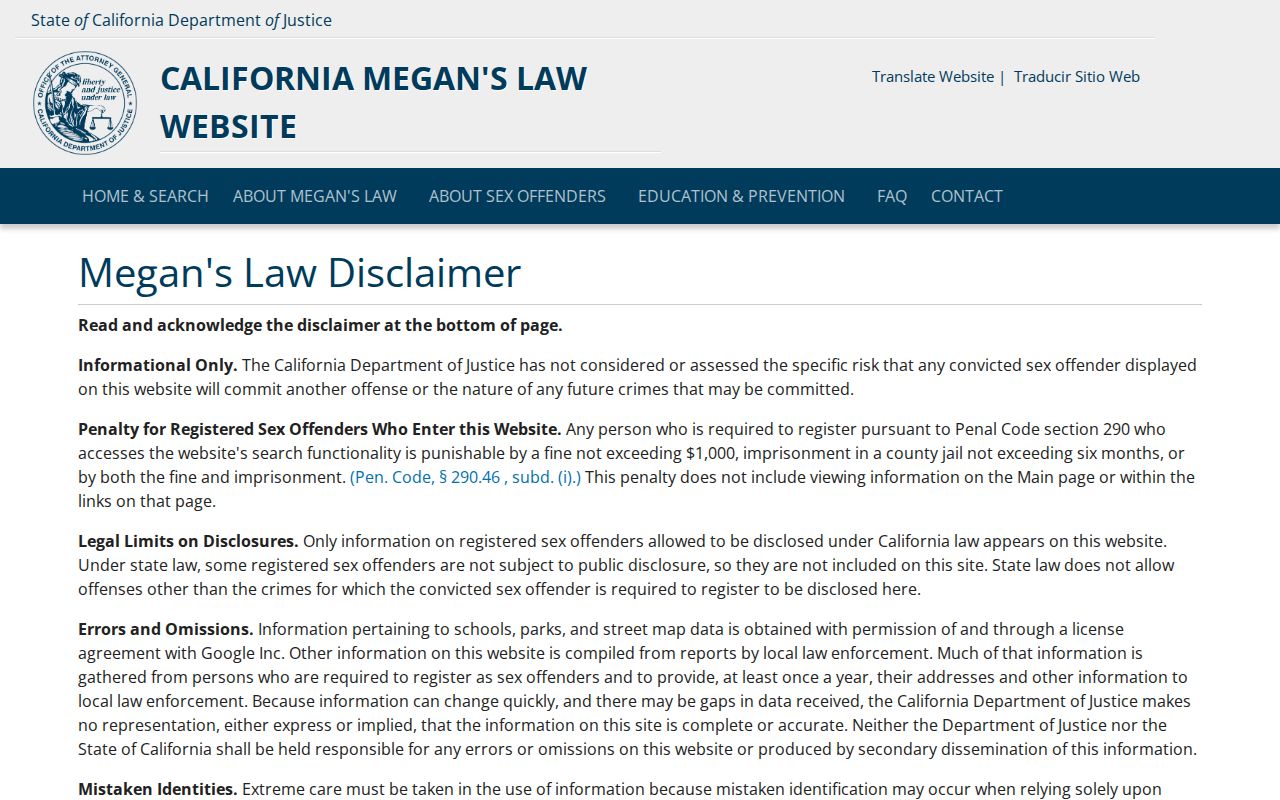
The Megan's Law search offers name and map or address-area modes with statutory use warnings. Treat a result as a specialized public record, verify the identity and disclosure category, and never infer a general residence from an unrelated name match.
Cathedral City DROP and Safe at Home
California privacy rights and public-record rules answer different questions. The California Consumer Privacy Act and California Privacy Rights Act give covered consumers rights to know, delete subject to exceptions, correct, opt out of sale or sharing, and limit certain sensitive-information uses. Beginning January 1, 2026, the California Privacy Protection Agency's DROP platform lets one request reach active registered data brokers. A deletion request does not erase lawful deeds, assessor entries, or court indexes. Official errors must be taken to the office that keeps the record.
Safe at Home is a separate California Secretary of State program under Government Code sections 6205 through 6216. Qualifying survivors and certain threatened workers can receive a substitute mailing address, mail forwarding, a service-of-process agent, and confidential voter registration. Enrollment is prospective, and legal descriptions can still expose a property's location. It does not sweep old records, and vital certificates are an exception. The program information lists 877-322-5227 and SafeAtHome@sos.ca.gov for questions; initial enrollment goes through a designated enrolling agency.
Note: A privacy request can change a covered commercial copy, while only the responsible custodian can amend an official Cathedral City record.
Lawful Limits on Cathedral City Resident Lookup
Public access is not a license to publish a person's identifiers or to turn a partial match into a claim. California Penal Code section 646.9 addresses stalking, section 653.2 addresses intentional electronic publication likely to cause unwanted contact, injury, or harassment, and Civil Code section 1708.7 provides a civil stalking action. Voter misuse is constrained by Elections Code sections 2194 and 18109. Motor-vehicle residence data is restricted by the federal Driver's Privacy Protection Act, 18 U.S.C. sections 2721 through 2725.
Official records and commercial compilation tools have different correction paths and different weight. A responsible resident lookup uses the compilation category only as an unverified lead and checks the underlying office before sharing a conclusion.
| Source class | What it can provide | How to verify or correct |
|---|---|---|
| Official custodian record | Record-specific facts, dates, roles, and source rules | Confirm with ACR, the court, elections, CDPH, a board, or the filing office |
| Commercial compilation category | Possible name and address leads assembled from mixed sources | Expect merged identities or lag; use the named custodian and its correction route |
| Historical index or obituary | Family, date, or address clue for genealogy and reconnection | Reconcile with a deed, probate file, certificate, or contemporaneous source |
Lawful personal use. A Cathedral City resident lookup supports personal research, family history, reconnection, civic records, and safety awareness. Do not use records to stalk, harass, intimidate, or publish identifying details to cause unwanted contact.